
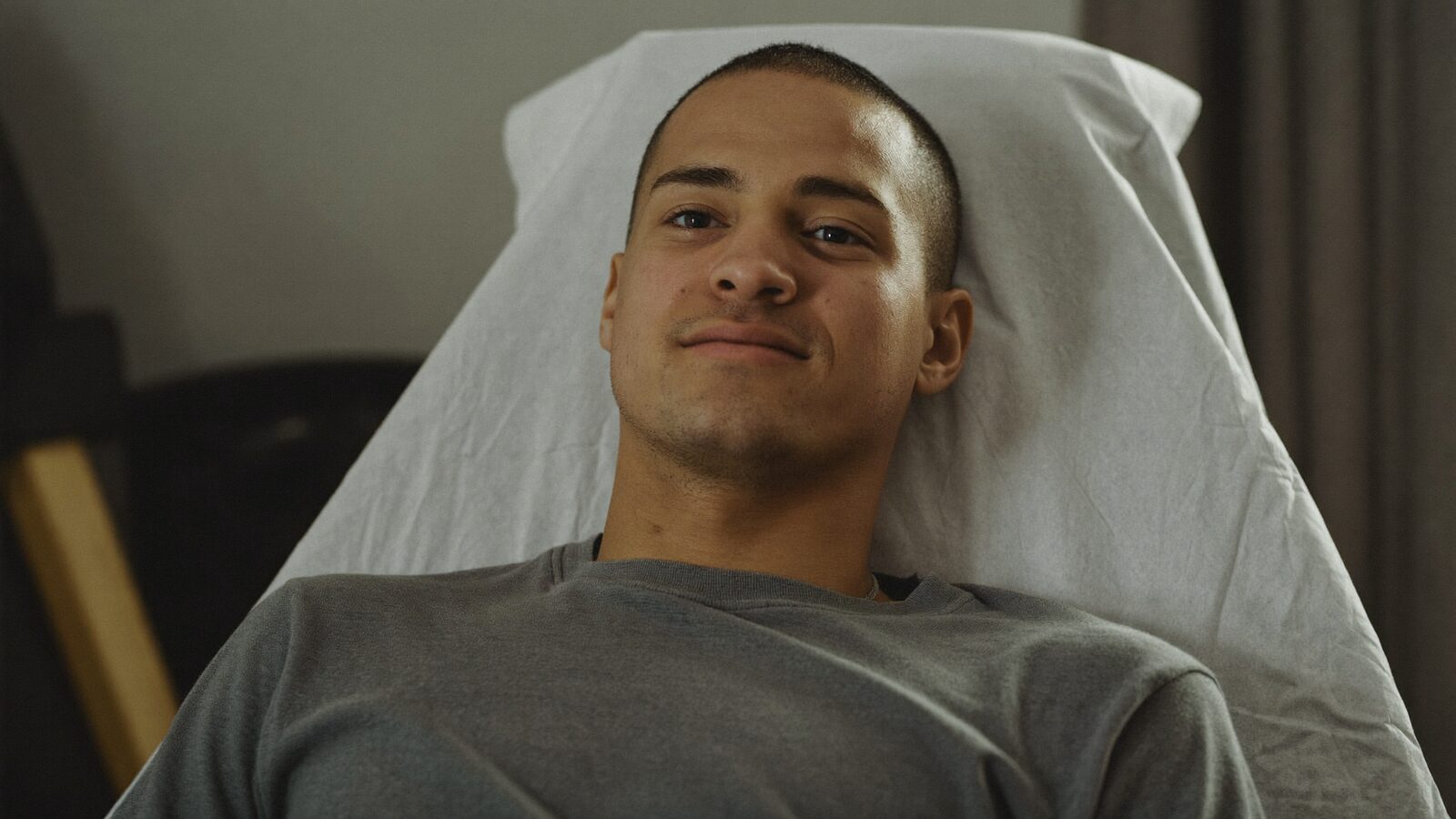
Does a hair transplant hurt? For most patients the honest answer is: only briefly. The sharp part is the numbing injections at the start, which sting for a few minutes. Once the scalp is numb, extraction and placement usually feel like pressure or nothing at all, and the soreness that follows is typically mild and fades within a few days.
That answer surprises many people who picture surgery as something to dread. A modern FUE hair transplant is done under local anesthesia, you stay awake, and you go home the same day. This guide walks through each stage of the day and the first week, where discomfort actually shows up, and what our Newton team does to keep it small.
Key takeaways
- The most noticeable discomfort in a hair transplant is the local anesthetic injections at the start, which usually last a few minutes per area.
- Once the scalp is numb, most patients feel pressure, tugging or vibration during extraction and placement rather than pain.
- Soreness after surgery is usually mild to moderate and peaks in the first 24 to 48 hours.
- Most patients manage the first nights with over-the-counter pain relievers, cold packs on the forehead and sleeping with the head raised.
- Pain that gets worse after day three, spreading redness, pus or fever is not normal and is a reason to call the clinic.
Why most of the fear is bigger than the pain
Fear of a hair transplant is usually built on images of older strip surgery and large plugs. Today's follicular unit procedures use small instruments, local anesthesia and careful pacing, so the pain for most people is concentrated in a short window at the start and a few sore days afterward, not across the whole experience.
Patients often tell us afterward that the anticipation was harder than the procedure. Part of that comes from not knowing what each step feels like. When you know that the stinging lasts minutes, that the long middle of the day is mostly about sitting still, and that the first night is the toughest stretch, the whole thing becomes much easier to plan around.
Comfort also depends on the person. Some people are naturally sensitive to injections, some carry tension in their neck and shoulders, and some get anxious in medical settings. None of these rule you out. They are worth mentioning at the consultation, because the plan for your day can be adjusted around them.
The numbing step: what the injections feel like
The numbing step is a series of small local anesthetic injections into the donor area at the back of the head and the recipient area on top. Most patients describe a pinch and a brief burning sting with each injection. The whole step usually takes several minutes per zone, and the sting fades as the anesthetic spreads.
Local anesthesia works by temporarily blocking the nerves that carry pain signals from the skin. It does not put you to sleep. You are awake, you can talk, and you can ask for a pause at any point. General anesthesia is not used for hair transplants at our clinic, which also means no recovery from sedation and no hospital stay.
Several small things make the injections more tolerable:
- Slow, steady delivery: anesthetic that goes in gradually tends to sting less than a fast injection.
- Working in sections: the team numbs one area, lets it take effect, then moves on, so later injections land in skin that is already partly numb.
- Distraction: talking, music or simple breathing exercises help many people get through the first few minutes.
- Oral pain relief: a pain reliever taken before the injections can take the edge off for patients who are nervous about needles.
Good to know: If you have ever had dental work with a numbing shot, the feeling is similar. The difference is the number of spots, not the intensity of each one.
During extraction and placement: what you feel
During graft extraction and placement, most patients feel pressure, light tugging or a vibration-like sensation, but not sharp pain. The local anesthetic keeps the donor and recipient areas numb for hours, and the team tops it up before it wears off, so the long middle part of the day is usually about comfort and patience rather than pain.
In FUE (follicular unit extraction), individual grafts are taken from the donor area one by one with fine handheld instruments. Our surgical team works by hand rather than with a robot or suction device. You lie face down or on your side for this part, which is often the most physically tiring stretch simply because of the position.
Placement comes next. Small recipient sites are made in the thinning area and grafts are set into them, either with forceps or with an implanter pen in a DHI-style approach. You usually sit or recline for placement, which most people find easier. A full session of up to about 4,000 grafts can fill most of a day, with breaks for meals and stretching.
Where discomfort can come from in the middle of the day
When patients do report discomfort mid-procedure, it is usually not the scalp. It is a stiff neck, a sore back from lying still, cold hands, or simply boredom. Asking for a position change, a pillow adjustment or a short walk is normal and encouraged. If you ever feel sharp sensation in the scalp, say so and more anesthetic can be added.
Does FUE hurt more or less than FUT?
FUE and FUT feel similar during surgery because both use the same local anesthesia. The difference shows up afterward: FUT (follicular unit transplantation, or strip surgery) removes a strip of scalp and closes it with stitches, so the donor area often feels tighter and sorer for longer than the scattered tiny wounds left by FUE.
The table below compares typical comfort patterns. Individual experience varies, and your consultation is the right place to talk through which technique fits your hair and goals, since comfort is only one factor.
| Stage | FUE (manual) | FUT (strip) |
| Numbing injections | Brief stinging, donor and recipient areas | Brief stinging, donor and recipient areas |
| During surgery | Pressure and tugging, long time face down | Pressure, shorter extraction phase |
| Donor area afterward | Mild soreness, small dot wounds | Tightness along the stitched line, often for 1 to 2 weeks |
| Sleeping the first nights | Mild tenderness at the back of the head | Tenderness and tightness when lying back |
| Typical pain relief | Over-the-counter medicine for a few days | Over-the-counter or prescribed relief for several days |
The first 48 hours after surgery
The first 48 hours after a hair transplant are when soreness is most noticeable. Most patients describe a dull ache in the donor area, tenderness on top where grafts were placed, and a tight feeling across the scalp. This usually peaks the first evening, as the anesthetic wears off, and steadily improves from there.
The first night is the one to plan for. The anesthetic fades a few hours after you get home, so it helps to take your pain relief on schedule rather than waiting until the ache builds. Sleeping with the head raised on two or three pillows, or in a recliner, keeps pressure off the grafts and reduces swelling.
Swelling is part of the picture for many people. Fluid from the procedure can drift down into the forehead and sometimes around the eyes on day two to four. It looks dramatic but is usually painless, and it settles within a few days. Our hair transplant recovery guide covers washing, sleeping and activity rules in more detail.
What the first week usually feels like
By day three most patients feel little more than tenderness when they touch the scalp. Itching tends to replace soreness around the end of the first week as small crusts form and heal. Itching is a sign of normal healing; the rule is to avoid scratching and to follow the washing routine you were given. For a fuller timeline, see your first two weeks after a hair transplant, day by day.
Pain relief that works
Pain relief after a hair transplant is usually simple: over-the-counter medicine taken on schedule, cold packs on the forehead rather than on the grafts, a raised sleeping position and rest. Most patients do not need strong prescription painkillers, and many stop taking anything after two or three days.
- Follow the medicine plan you are given: take pain relief at the times on your instruction sheet for the first day or two, and ask before taking anything not on the list, since some products affect bleeding.
- Cold on the forehead only: a cold pack held on the forehead helps with swelling. Never press anything onto the graft area.
- Sleep elevated: head raised for the first several nights reduces both swelling and morning tightness.
- Skip alcohol and nicotine: both can slow healing and make the first days less comfortable.
- Rest without lying flat on the donor area: a travel pillow can help keep weight off the back of the head.
Some patients ask whether platelet-rich plasma speeds healing or comfort. PRP is a separate treatment with its own purpose; our article on PRP and hair transplants explains when it is used alongside surgery.
When should you call the clinic about pain?
You should call the clinic if pain gets worse instead of better after the third day, if redness spreads beyond the treated area, if you see pus or have a fever, or if bleeding does not stop with gentle pressure. These are uncommon, but they are not part of normal healing and deserve a prompt check.
Normal recovery moves in one direction: each day feels a little better than the one before. Anything that reverses that pattern is worth a call. Other reasons to reach out include numbness that lasts beyond a few weeks, a single very tender bump, or swelling that keeps increasing after day four.
Patients at our Newton clinic have 12 months of follow-up, so a question about comfort or healing is never a bother. It is far better to call early and hear that something is normal than to sit worrying about it. You can reach the team through the contact page or by phone at (857) 290-5988.
How Nova Medical Boston plans for comfort
Comfort at Nova Medical Boston starts at the consultation, where we ask about needle anxiety, pain sensitivity, past procedures and any medicines you take. Dr. Jeffrey Spiegel, MD reviews and approves every plan, and the day itself is paced so that numbing, extraction and placement happen in sections with breaks in between.
A few practical details help too. You can bring headphones or a playlist, wear a button-up shirt so nothing pulls over your head afterward, and arrange a ride home. We explain each step before it happens, so nothing comes as a surprise.
Some people also want to know how hair surgery compares with other cosmetic procedures around the forehead. If you are weighing surgical hairline advancement against grafts, our article on hairline lowering explains how recovery differs between the two approaches.
Ask Us Anything About Comfort
Bring your questions about pain, numbing and recovery to a free consultation at our Newton clinic. We will explain each step of your day before it happens.