
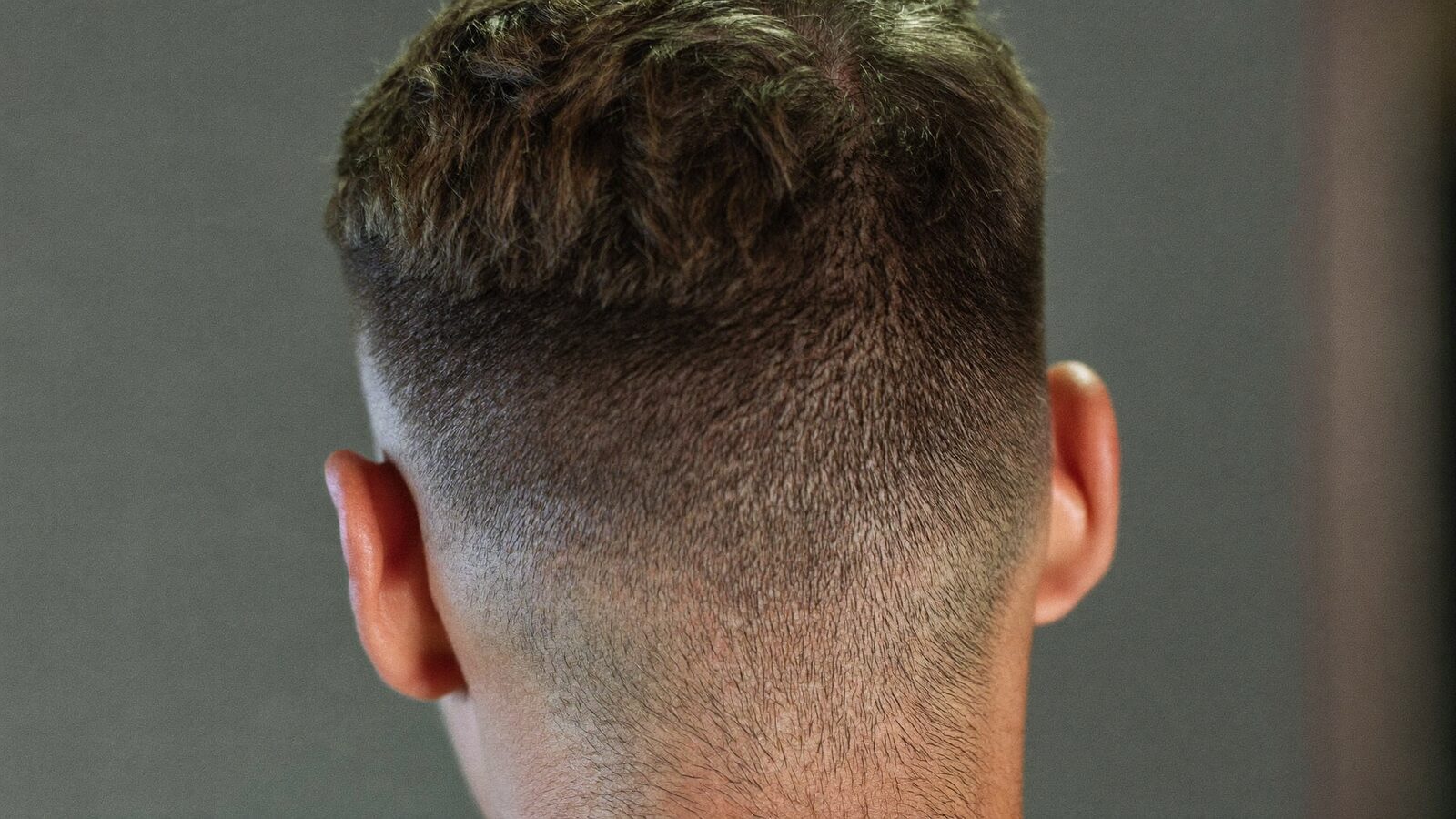
No clinic can honestly offer an "unlimited grafts" hair transplant, because your donor area holds a fixed number of follicles that cannot grow back once removed. Most people have a lifetime budget of very roughly 5,000 to 8,000 safely movable grafts, and some have fewer. Spending too much of it at once can thin the back of the head for good.
Flat-price packages that promise as many grafts as you need sound generous, but they shift the risk onto your scalp. This article explains how donor density sets your graft budget, what overharvesting looks like, and how a careful plan keeps grafts in reserve for the hair you may lose later. For how extraction works at our Newton clinic, see the FUE hair transplant overview.
Key takeaways
- The donor area is the band of DHT-resistant hair at the back and sides of the scalp, and its follicles do not regrow once extracted.
- Donor density is measured as follicular units per square centimeter and varies widely between patients.
- Overharvesting leaves the donor area patchy or see-through and is one of the hardest transplant problems to repair.
- A sound plan reserves part of the donor supply for future loss, since pattern baldness often continues for years.
- At Nova Medical Boston, up to about 4,000 grafts can be moved in one day when density allows, and larger plans are split into two sessions.
How many grafts can your donor area give?
Your donor area can usually give a few thousand grafts over a lifetime, with a common range of about 5,000 to 8,000 for people with average density. The exact number depends on how many follicular units grow per square centimeter, how many hairs each unit holds, and how wide the safe donor zone is on your scalp.
Think of it as a lifetime graft budget rather than a per-session allowance. Every procedure, whether FUE or FUT, draws on the same account. A graft is a follicular unit: a natural bundle of one to four hairs that grows from the same spot. A patient with many three- and four-hair units can create more visible coverage per graft than someone whose donor area is mostly singles.
The safe donor zone matters too. It is the horseshoe-shaped region above the ears and across the back of the head where hair tends to resist the hormone DHT. Taking grafts from outside that zone risks moving hair that may later fall out in its new position.
Donor density and how it is measured
Donor density is measured by counting the follicular units and hairs in a small, defined patch of scalp, usually with magnification. Clinicians look at units per square centimeter, average hairs per unit, hair thickness and scalp laxity. Together these numbers show how many grafts can be removed without making the donor area visibly thinner.
Density is not the only factor. Two people with the same unit count can have very different results because hair caliber, curl and color contrast with the skin change how full the donor area looks after extraction. Coarse, wavy hair hides thinning better than fine, straight hair on a light scalp.
| Donor factor | What it means | Effect on your graft budget |
| Units per square centimeter | How many follicular units grow in a small patch | Higher density allows more extraction before thinning shows |
| Hairs per unit | Average number of hairs in each graft | More multi-hair units give more coverage per graft |
| Hair caliber | Thickness of each individual hair | Thick hair covers more scalp with fewer grafts |
| Curl and wave | Natural shape of the hair shaft | Curly hair often looks fuller and hides extraction well |
| Hair to skin contrast | Difference between hair color and scalp color | Low contrast makes both thinning and scars less visible |
| Size of the safe zone | Width of the DHT-resistant band | A narrow zone limits the total budget |
At a free consultation in Newton, the donor area is assessed before a graft range is discussed. That order matters: the number should come from your scalp, not from a package.
Why "unlimited grafts" offers are a warning sign
Unlimited grafts offers are a warning sign because they treat a finite donor supply as if it were free. When the price does not change with graft count, there is little reason to hold back, and the patient may lose donor hair that should have been saved for future sessions or for areas that thin later.
These packages are common in high-volume settings, including some overseas clinics, and they often come with very large single-day counts. A big number can look like value on paper. In practice, the cost may show up years later as a thin donor area and no reserve left for touch-ups.
Some questions that quickly reveal how a clinic thinks about your donor supply:
- How many grafts do you estimate my donor area holds? A careful clinic gives a range and explains how it was measured.
- How many will this session use, and how many stay in reserve? The answer should leave room for future loss.
- What happens if my donor density is lower than expected on the day? The plan should scale down, not stretch.
- Who decides the final graft count? You should know who reviews and approves the plan.
What overharvesting looks like
Overharvesting looks like a thin, patchy or moth-eaten donor area where too many follicles were removed, often with visible scalp between the remaining hairs. It can also appear as see-through patches, uneven bands, or extraction scars that show even at moderate hair length. Overharvested donor hair cannot be regrown.
The signs often appear once the donor area fully heals and the patient goes back to a usual haircut. Common patterns include:
- Diffuse see-through thinning: the whole back of the head looks lighter than the sides, especially under bright light.
- Clustered patches: grafts taken too close together leave small bald islands.
- Extraction outside the safe zone: grafts taken too high or too low may later thin in their new location as well.
- Visible white dots: large or crowded extraction sites that show through short hair.
Repair options exist but are limited by the same donor problem. Scar camouflage, careful grafting into thinned areas, or using body hair in selected cases can help some patients. Our hair transplant repair page explains how earlier work is assessed, and the post on revision hair transplants covers what can and cannot be improved.
Planning for future loss
Planning for future loss means placing today's grafts where they will still look right if surrounding hair keeps thinning, and keeping enough donor hair for a second session later. Pattern hair loss often continues through a man's thirties, forties and beyond, so a plan built only for today's hairline can look odd in ten years.
A practical plan usually does three things. It sets a hairline that suits an older face, not just a current one. It decides whether the hairline, the crown or the midscalp is the priority, since the crown can absorb a large number of grafts. And it estimates how much donor supply should be held back.
A planning rule of thumb: if your loss is still active, expect the plan to prioritize the front and leave the crown partly for later. Covering everything at once can drain the donor area before you know the full extent of your hair loss.
Dr. Jeffrey Spiegel, MD, a board-certified facial plastic and reconstructive surgeon, reviews and approves every plan at the clinic, designs the hairline with the patient and oversees the procedure. The surgical team extracts grafts by hand with fine handheld instruments, spacing them across the donor zone so no single area is overused. The steps are laid out on our Nova Medical FUE protocol page.
Medical treatment can also stretch a graft budget. Slowing loss in native hair means fewer future grafts are needed to keep the result balanced, which is why many plans discuss medication or PRP as a separate option alongside surgery.
Why do some hair transplants fail years later?
Some hair transplants fail years later because the plan did not account for continuing hair loss or used up the donor area too early. The transplanted hair often survives, but native hair around it thins, leaving an isolated hairline, a gap behind the grafts, or a crown that can no longer be filled.
A few patterns come up again and again:
- The island effect: a dense new hairline sits in front of a widening thin zone, which looks unnatural as loss progresses.
- Too low, too early: a young patient gets an aggressive hairline that no longer suits the face or the remaining hair a decade later.
- No reserve: the donor area was emptied in one large session, so there is nothing left to address new thinning.
- Grafts from unstable hair: follicles harvested from outside the safe zone thin in their new spot.
Each of these is a planning problem rather than a growth problem. Our article on why some transplants look natural and others look obvious explores how design choices age over time.
What a responsible graft plan looks like
A responsible graft plan names a specific range for this session, explains how that number fits your measured donor supply, and shows what is being kept in reserve. It also sets realistic expectations about density and timeline, and it treats the hairline and crown as parts of one long-term design rather than separate jobs.
At Nova Medical Boston, up to about 4,000 grafts can be moved in a single day when donor density allows, the donor area is protected from overharvesting, and very large plans are split into two sessions. Pricing is per graft, $3.99 to $7.99, with most procedures between $4,000 and $15,000, no session fees and 0% financing for the first 12 months. You receive a written quote after a free consultation and 12 months of follow-up after surgery.
If you have seen a package that sounds too generous, bring it to your consultation. Comparing it against your measured donor supply is the clearest way to see what it would really cost. Our guide to FUE myths and facts covers other claims worth checking.
Know Your Donor Budget Before You Commit
Get your donor density assessed and a graft plan that keeps reserve for the future. Book a free consultation at our Newton clinic.