
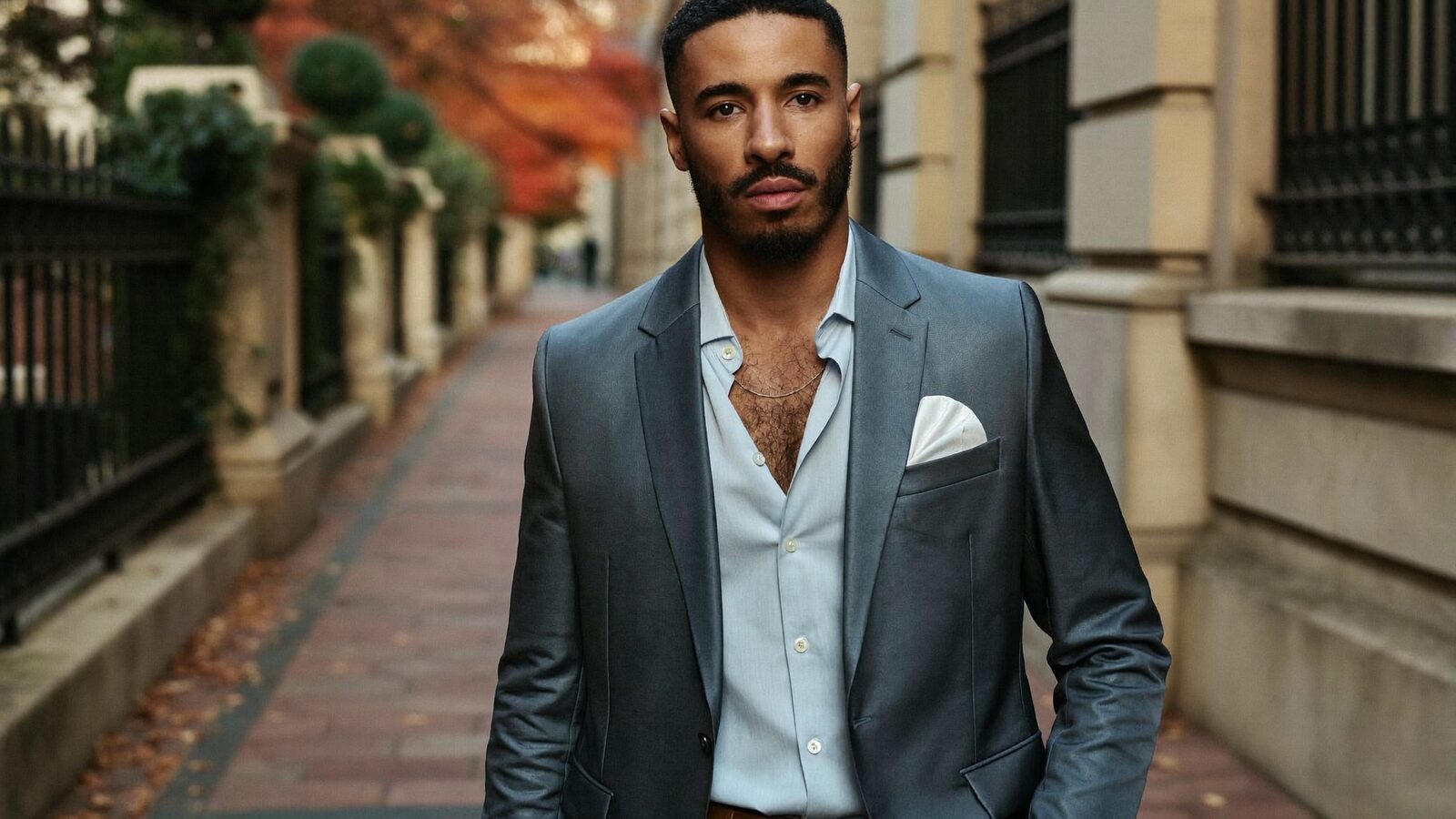
A celebrity hairline can be a useful starting point for a hair transplant, but it can rarely be copied exactly. A photo shows the shape and style you like; it does not show the person's age, donor supply, hair texture, styling products or lighting. The realistic goal is a hairline that borrows the feel of the look and fits your own face and hair.
Patients bring inspiration photos to consultations all the time, and that is a good thing. This guide explains what those pictures can teach a surgical team, what they hide, and how an image becomes a plan you can actually carry for decades with FUE hair transplant surgery.
Key takeaways
- Inspiration photos help a team understand the shape, height and softness you want far faster than words.
- Famous hairlines are often shown with professional styling, lighting, retouching and sometimes hairpieces or concealers, so the photo may not reflect real density.
- Your age, donor supply and hair texture set the limits; a 25-year-old's hairline is rarely right for someone who is still losing hair.
- A realistic plan keeps the character of the inspiration look but sets the height and density your scalp can sustain over time.
Why are celebrity photos useful in a consultation?
Celebrity photos are useful in a hair transplant consultation because they show, in one image, the hairline shape, height, temple angle and overall look a patient likes. Words such as "natural" or "strong" mean different things to different people. A picture gives the team a shared reference to talk through.
A good consultation uses the photo as a conversation starter. Is it the straight, squared front you like, or the slightly irregular, soft edge? Is it the way the temples are filled, or simply that the hair looks thick enough to push back? Pinning down what draws you to the image is often more useful than the image itself.
It also helps to bring photos of yourself from five, ten or fifteen years ago. Your own former hairline is often the most natural template available, because it was built for your face. Many patients find that the look they admired in a famous face is close to how their own hair once sat.
What does a celebrity photo hide?
A celebrity photo hides the person's age, family history, donor density and how the hair is styled for the camera. It also hides lighting, makeup, retouching and the possibility of hair fibers, toppers or hairpieces. The hairline you see may be carefully presented rather than how the scalp looks on an ordinary Tuesday morning.
Some public figures have openly said they had hair restoration. The English footballer Wayne Rooney, for example, publicly confirmed a hair transplant in 2011. Other famous names attract years of online speculation that has never been confirmed, and it is impossible to know from photos alone what was done, how many sessions it took or what is maintained with medication.
- Age: a hairline that looks right on a 30-year-old in a film still may look out of place on someone in their fifties.
- Donor supply: nobody can see in a photo how much hair the person had to work with or how many sessions were involved.
- Styling: volume products, blow-drying and the direction of the hair change how dense it looks.
- Presentation: studio lights, makeup, concealer fibers and image editing can all make thinning invisible.
- Maintenance: many people take medication to protect their native hair, which keeps a look stable over time.
Reality check: treat a famous hairline as a mood board, not a blueprint. The useful parts are the shape and character, while the density and height still need to match your own scalp.
Hair type and density limits
Hair type and density set real limits on copying any celebrity hairline. Thick, coarse or wavy hair covers more scalp per graft than fine, straight hair, and low contrast between hair and skin color looks denser. If your hair differs from the person in the photo, the same number of grafts will give a different look.
Caliber, meaning the thickness of each individual hair, has a large effect. Two people with the same number of grafts per square centimeter can look completely different if one has thick strands and the other has fine ones. Color contrast matters too: dark hair on fair skin shows gaps more than light hair on light skin.
Curl changes the picture again. Curly and Afro-textured hair lifts away from the scalp and covers more area, which helps coverage but also means the grafts must follow the curl beneath the skin. Our article on transplants for curly and Afro-textured hair explains how that affects planning.
| Feature | Easier to match a dense look | Harder to match a dense look |
| Hair caliber | Coarse, thick strands | Fine, thin strands |
| Texture | Wavy or curly | Very straight |
| Contrast | Hair color close to skin tone | Dark hair on fair skin |
| Donor density | Dense back and sides | Sparse donor zone |
| Loss pattern | Stable, limited recession | Active, spreading loss |
One day of surgery can place up to about 4,000 grafts, depending on donor density, and the donor area is finite. A hairline that needs a very high density at a very low position may use grafts you would later want for the crown. The article on crown versus hairline priorities covers how that trade-off is weighed.
How do you turn an inspiration photo into a realistic hairline?
Turning an inspiration photo into a realistic hairline means keeping the parts you like, such as the shape, the softness or the temple angle, and adjusting the height and density to your age, face and donor supply. The plan is then drawn on your forehead so you can judge it in the mirror.
At our Newton clinic, Dr. Jeffrey Spiegel, MD, a board-certified facial plastic and reconstructive surgeon, designs the hairline with you and reviews every plan. The design considers facial proportions, brow position and how your hair naturally falls, then sets a line that will still look appropriate if you lose more hair later.
- Identify the feature: decide what you like in the photo, whether that is shape, height, softness or the temples.
- Compare with your past: look at your own earlier photos to see the hairline your face was built around.
- Map the donor: the team measures donor density and estimates how many grafts are realistically available now and later.
- Draw and adjust: a proposed line is marked on your forehead, then raised, lowered or softened until it looks right.
- Plan for the future: the final design leaves a donor reserve and suits how you are likely to look at 50 or 60.
A natural front edge is never a perfect line. It has a soft zone of single hairs with slight irregularity, then denser grafts behind. That is often what people admire in a famous hairline without realizing it: the edge looks unforced. Looking through real results in our before and after gallery can show you what that softness looks like on ordinary patients.
Why a younger patient's goal needs extra caution
A younger patient's hairline goal needs extra caution because hair loss usually continues through the twenties and thirties. A low, dense, adolescent-style line chosen at 24 can look unnatural at 40 if the hair behind it thins. Conservative height and a strong donor reserve protect the long-term result.
Many inspiration photos show people in their twenties or early thirties at the peak of their hair. Recreating that exact line on someone who is still losing hair can leave a band of transplanted hair in front of a thinning area later. Medication to slow loss is often discussed for younger patients for exactly this reason.
Our guide to being a good hair transplant candidate explains how age, loss pattern and family history shape these decisions.
What questions should you ask before copying a look?
Before copying a celebrity look, ask whether your donor supply can support it, whether the height suits your age and face, and how it will look if your loss continues. Clear answers to those questions separate a hairline that ages well from one that only works for a few years.
- Feasibility: can my donor area support this density at this height, and how many grafts would it take?
- Age fit: will this hairline look natural on me in 15 or 20 years?
- Hair type: how will my caliber, color and texture change the look compared with the photo?
- Reserve: how many grafts will remain for the crown or future thinning?
- Proof: can I see results on patients with hair similar to mine?
- Cost: what will the plan cost in total, including any second session?
On cost, our pricing runs $3.99 to $7.99 per graft with no session fees, and most procedures fall between $4,000 and $15,000. You receive a written quote after a free consultation, with 0% financing available for the first 12 months.
Bringing your photos to a consultation in Boston
Bringing photos to a consultation is encouraged: a few clear images of hairlines you like, plus your own older photos, help the team understand your goal quickly. The consultation then turns that goal into a written plan with a graft count, a proposed hairline and a donor reserve.
Expect an honest conversation. If a look is not realistic for your hair, the team will say so and suggest the closest version that is. You can read more about how our team works on the Nova Medical Boston hair transplant clinic page.
Turn your inspiration photo into a real plan
Book a free consultation in Newton. Bring the photos you like, and leave with a proposed hairline, a graft count and a written quote.