
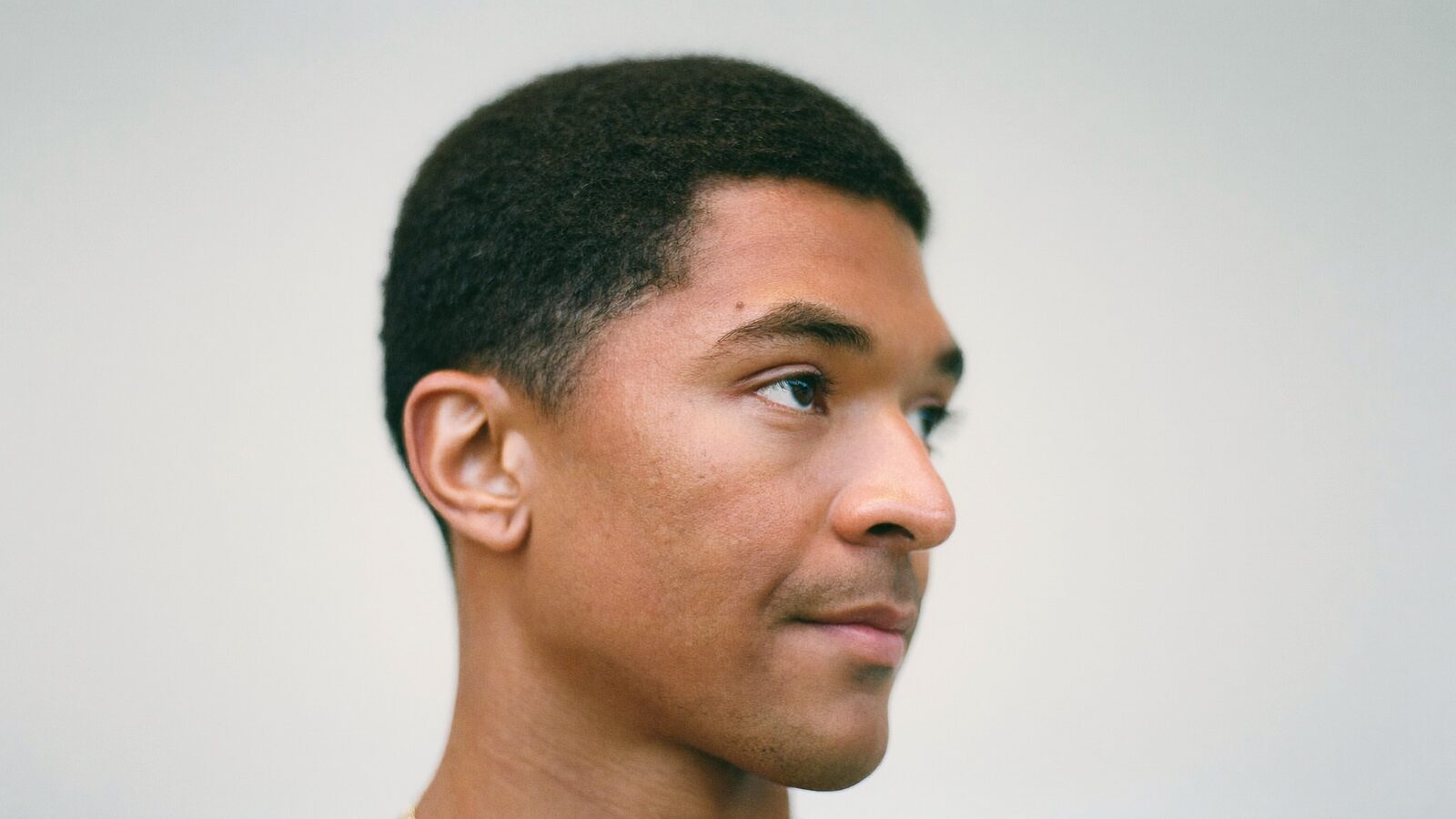
Choosing a hairline for face shape comes down to three things: how high the front edge sits relative to your forehead and features, the outline it follows across the front and temples, and how soft and irregular the first few millimeters at the edge look. A good design fits the face you have now and the face you will have at 50 and 65, not just the one in the mirror today.
At our Newton clinic, Dr. Jeffrey Spiegel, MD, a board-certified facial plastic surgeon, designs the hairline with each patient before any grafts are planned for an FUE hair transplant in Boston. This guide walks through the same measurements and judgment calls we use, so you can walk into a consultation knowing what to ask for and what to question.
Key takeaways
- For most adult men, the front of a transplanted hairline sits roughly 7 to 9 cm above the eyebrows, a little higher than a teenage hairline.
- Face shape changes the outline: round faces usually suit a slightly higher, more angular frame, while long faces often benefit from a lower, flatter line.
- The first 3 to 5 mm of a natural hairline is made of single-hair grafts placed in an irregular, staggered zone rather than a straight edge.
- A hairline should be designed so it still looks right if the crown and sides keep thinning over the next 20 to 30 years.
- Natural results come from angle, direction and density gradients, not from the total graft count alone.
How high should a hairline sit? Facial thirds explained
Hairline height is usually judged with facial thirds: the face is divided into roughly equal sections from the hairline to the brows, the brows to the base of the nose, and the nose to the chin. A transplanted hairline that keeps the top third close to the other two tends to look balanced and age-appropriate.
In practice, most adult men end up with a front point about 7 to 9 cm above the mid-brow, measured with the eyebrows relaxed. Women's hairlines are typically a little lower and rounder. Those numbers are starting points, not rules. A tall forehead with a strong brow ridge can carry a slightly higher line, while a short face can look top-heavy if the hairline drops too far.
A second landmark is the point where the hairline crosses the side of the forehead. If you look straight ahead, a line drawn upward from the outer corner of the eye usually meets the hairline near the start of the temple recession. That junction controls how the whole frame reads from the front.
Why lower is not automatically younger
Many patients bring a photo from their early twenties and ask for that exact line. A juvenile hairline often sits low and almost flat across the forehead. Recreating it at 40 can look unnatural, and it spends grafts on a zone that has to be defended for life. A mature hairline, with a gentle recession at the temples, usually looks more convincing on an adult face.
Which hairline shape suits oval, round and square faces?
The right hairline shape depends on proportions. Oval faces suit most designs, round faces usually look more defined with a slightly higher and more angular frame, and square faces often pair well with a straighter central line and softened corners. Long or narrow faces generally need a lower line to shorten the forehead.
These are tendencies, not formulas. Bone structure, brow position, beard style and even how you part your hair all shift the call. The table below sums up the common starting points we discuss during planning.
| Face shape | Typical hairline approach | What to avoid |
| Oval | Moderate height with a soft, rounded central zone and gentle temple recession | Overly flat lines that erase the natural curve |
| Round | Slightly higher center with more defined temple angles to add length | A low, round line that widens the face further |
| Square | Fairly straight center, corners softened so the jaw is not echoed by the forehead | Sharp right-angle corners that look like a helmet |
| Long or oblong | Lower central height to shorten the forehead, fuller temple points | High, receded designs that stretch the face |
| Heart or triangular | Moderate height with filled lateral corners to balance a narrow chin | Deep temple recession that exaggerates a wide forehead |
Some men have a natural widow's peak, a small V at the center of the hairline. If you had one before, keeping a softened version can look right. Creating a sharp peak where none existed tends to draw the eye in the wrong way.
Temple points and the side profile
The temple points are the small triangles of hair above the sideburns. They frame the eyes from the side and are often overlooked. Restoring them in a modest way can make a front hairline look complete in profile photos, while ignoring them can leave a newly filled front sitting over an empty side.
Irregularity and single-hair grafts
A natural hairline is never a ruler-straight edge. The front 3 to 5 millimeters, called the transition zone, is built from single-hair follicular units placed in a scattered, slightly uneven pattern. Behind that zone, two-hair and three-hair grafts add density so the line looks soft up close and full from a distance.
Follicular units are the natural groups of one to four hairs that grow together from the scalp. With FUE, short for follicular unit extraction, each unit is taken individually from the donor area at the back and sides of the head. That lets the team sort grafts by hair count and save the finest single hairs for the front.
Three details matter most in the transition zone:
- Micro-irregularity: small zigzags and clusters along the edge, so no two centimeters look identical.
- Sentinel hairs: a few isolated single hairs placed just in front of the main line, the way a native hairline thins out at its edge.
- Angle and direction: front hairs grow forward and low to the scalp, often with a slight sideways sweep, rather than standing straight up.
Our step-by-step Nova Medical FUE protocol explains how grafts are sorted and handled between extraction and placement, which is where much of this detail is protected.
Worth knowing: Hair color and thickness change the design. Coarse dark hair against light skin shows every graft, so the transition zone needs to be wider and softer. Fine or light hair blends more easily and can tolerate a slightly firmer edge.
Designing for the future
A hairline for face shape has to fit the patient's likely future hair loss, not only today's pattern. Because androgenetic alopecia often keeps progressing behind the transplanted area, a responsible design sits a little higher and more conservative, so the front still matches the rest of the head if the crown and mid-scalp thin later.
Your donor area is finite. Most men have somewhere between 5,000 and 7,000 safely available grafts over a lifetime, and some have fewer. Every graft placed in an overly low or dense front is a graft that cannot be used later to cover the crown or reinforce a thinning mid-scalp. That is why age, family history and current Norwood stage all feed into the design. The Norwood scale is the standard seven-stage chart for male pattern hair loss.
Younger patients are the group where this matters most. A 25-year-old with early recession may still be losing hair quickly, and a dramatic low line can become an island of hair in front of a bald area within a decade. In many cases, a modest frontal restoration combined with medication to slow loss is the wiser first step. We cover how medication fits around surgery in our guide to finasteride and minoxidil after a hair transplant.
A simple planning comparison
| Patient profile | Typical design priority |
| Under 30, active loss | Conservative height, soft temples, donor reserve kept for later |
| 30 to 45, stable pattern | Balanced height with fuller frontal density |
| Over 50, advanced loss | Mature, slightly higher line that frames the face with fewer grafts |
What makes a hairline look natural?
A transplanted hairline looks natural when its height suits the face, its edge is irregular, single-hair grafts sit at the front, and every hair follows the correct angle and direction. Density should build gradually from the soft edge to the fuller zone behind it, the same way an untreated hairline grows.
The giveaways of an obvious result are usually the opposite: a straight, abrupt edge, multi-hair grafts at the very front, hairs pointing up or in mixed directions, and a line set too low for the patient's age. Our article on why one hair transplant looks natural and another looks obvious goes deeper into those warning signs.
Healing also plays a part. Transplanted hairs typically shed within a few weeks, begin regrowing around months 3 to 4, and mature in thickness and texture over 12 to 18 months. The hairline you see at month 4 is not the finished result, so judge the design at the one-year mark.
How the design session works at our Newton clinic
A hairline design session is a hands-on part of the free consultation where the proposed line is drawn directly on the scalp, checked from several angles and adjusted with the patient. Dr. Jeffrey Spiegel reviews the measurements, face shape and donor supply before approving the final outline and graft plan.
The process usually follows the same sequence:
- Review: we look at your hair loss pattern, family history, old photos and what you want to change.
- Measure: facial thirds, mid-brow distance and temple position are marked with a soft pencil.
- Draw: a first line is sketched, then checked in a mirror from the front, side and above.
- Adjust: height and corners are refined together until the frame looks right with your usual hairstyle.
- Plan: the approved outline is converted into a graft estimate and a written quote.
Bring photos you like, but treat them as a direction rather than a template. If you want to compare real outcomes on different face shapes, the before and after gallery is a useful place to start. And if you are still comparing providers, our checklist on how to choose a hair transplant clinic lists the hairline questions worth asking anywhere you consult.
Questions to ask about your hairline design
The most useful hairline questions are about height, future loss and graft budget. Asking them during the consultation shows you whether the clinic is designing for your face over a lifetime or simply filling the area you point to today.
- Height: how many centimeters above my brows will the center sit, and why that number?
- Temples: will the temple corners be filled, softened or left as they are?
- Future loss: how will this line look if my crown thins over the next 10 years?
- Graft split: how many grafts go to the hairline zone versus the area behind it?
- Single hairs: how wide is the transition zone of single-hair grafts?
- Reserve: how much donor supply will remain afterward for a possible second session?
Clear, specific answers to these questions are a strong sign the plan has been thought through for your face, your hair and the years ahead.
Get a Hairline Designed for Your Face
Book a free consultation in Newton to have a hairline drawn, measured and reviewed for your face shape, age and donor supply.