
In the manual vs robotic FUE debate, the short answer is that the machine matters far less than the people planning and carrying out the work. Both approaches remove individual follicular units from the back of the scalp; the real differences show up in how each one adapts to your hair type, scalp feel and hairline goals. At our Newton clinic, every FUE hair transplant is done with fine handheld instruments, and this guide explains why.
FUE stands for follicular unit extraction: small groups of one to four hairs are lifted out one at a time and later placed into tiny openings in thinning areas. Whether a hand or a robotic arm guides the punch, the goal is the same. What changes is control, flexibility and, often, the price you pay for the equipment.
Key takeaways
- Manual and robotic FUE both remove follicular units individually; neither leaves a linear scar.
- A robot assists mainly with extraction, while hairline design, angles and placement still depend on human judgment.
- Handheld extraction lets the operator adjust depth and angle graft by graft, which helps with curly hair and firm scalps.
- Graft survival depends on low transection, gentle handling and short time out of the body, not on the device brand.
- Equipment costs are often passed on to patients, so a robotic label can raise the price without improving the result.
How does manual FUE work?
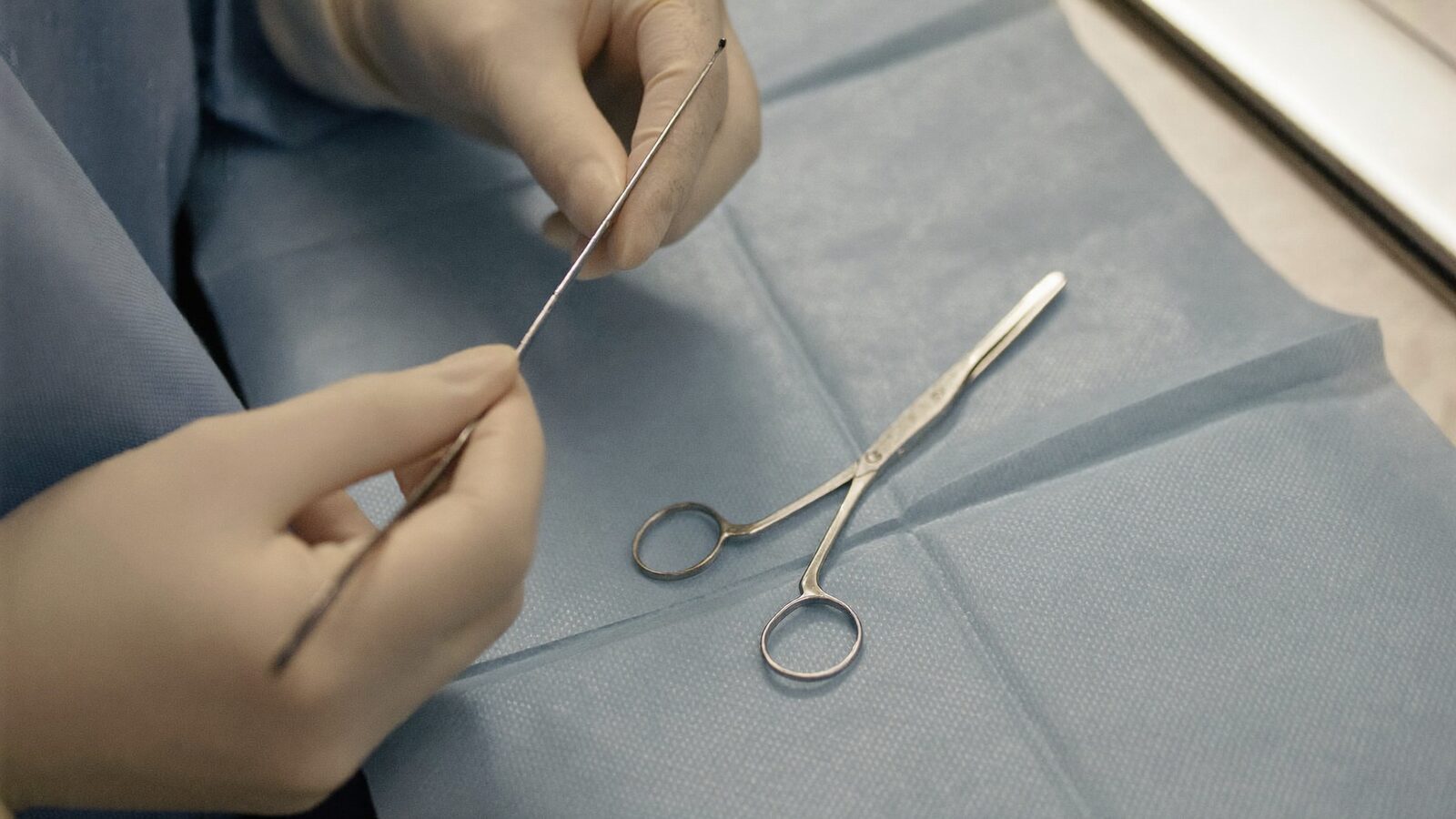
Manual FUE is a technique where a trained team member uses a handheld punch, typically 0.7 to 1.0 mm wide, to score around each follicular unit and ease it free. The operator feels the tissue, watches the hair exit angle and adjusts pressure in real time, one graft after another.
The process starts with trimming the donor area so the hair exit angle is visible. After local anesthesia, the operator aligns the punch with each hair, makes a shallow circular incision and then lifts the unit out with fine forceps. Extracted grafts go straight into a chilled holding solution while they wait for placement.
Because the hand is guiding every movement, the operator can change direction when a follicle curves below the skin, slow down in a patch of finer hair or skip a unit that looks fragile. That moment-to-moment feedback is the main strength of the method, and it is the core of the Nova Medical FUE protocol used in Newton.
- Tool: a sharp or hybrid handheld punch sized to the patient's follicular units.
- Feedback: tactile and visual, adjusted for every graft rather than per zone.
- Spread: extraction is scattered across the safe donor zone so no patch looks thinned.
- Pace: a skilled team can remove a large session, up to about 4,000 grafts depending on donor density, in one day.
How does robotic FUE work?
Robotic FUE is a computer-guided system in which cameras map the donor area and a robotic arm positions a punch over each selected follicular unit. The machine uses image analysis to estimate hair angle and spacing, then performs the scoring motion, while a technician supervises and approves its choices on a screen.
Robotic systems were developed to make extraction more consistent over long sessions, since fatigue can affect any human operator. The cameras track hair direction above the skin and pick units according to programmed spacing rules. In some systems a dual-punch design first cuts the skin and then a blunt inner punch dissects deeper.
The limitations are worth knowing. The camera reads the hair where it leaves the skin, but it cannot see how the follicle bends underneath. Patients usually need the donor area shaved short so the cameras can read each hair. The robot handles only part of the job; donor planning, hairline design and implantation still rely on people.
Worth knowing: Nova Medical Boston does not use robotic or suction-assisted extraction devices. All grafts are removed by hand with fine handheld FUE instruments by the surgical team, under a plan Dr. Jeffrey Spiegel, MD reviews and approves.
Graft quality and transection
Graft quality in FUE comes down to transection, which means cutting through a follicle during extraction, plus how gently the graft is handled afterward. A well-trained manual operator can keep transection low by adjusting angle and depth per graft, while a robot follows its programmed path even when the follicle curves differently below the skin.
A transected follicle may not grow, or may produce a thinner hair, so every percentage point matters when your donor supply is limited. Transection rates vary widely between clinics, and they depend heavily on the operator's experience, the punch choice and the patient's hair characteristics.
Extraction is only half the story. Grafts also need enough surrounding tissue to protect the follicle, steady hydration, and as little time outside the body as possible. Those steps are handled by people in both approaches. A clean robotic extraction followed by rough handling still produces weaker growth than careful manual work done start to finish.
When you compare clinics, ask how grafts are checked under magnification, how they are stored, and roughly how long they spend out of the body. Those answers tell you more about likely growth than the name of any machine.
Manual vs robotic FUE at a glance
Manual vs robotic FUE differs most in flexibility, preparation and cost, while the end goal of intact, healthy grafts stays the same. The comparison below summarizes the practical trade-offs patients usually ask about during a consultation, assuming an experienced team runs both methods.
| Factor | Manual FUE | Robotic FUE |
| Who guides the punch | Trained operator, graft by graft | Robotic arm, with a technician supervising |
| Angle adjustment below the skin | Felt and corrected in real time | Based on the visible hair angle above the skin |
| Curly or afro-textured hair | Adaptable with punch choice and technique | Often harder for cameras to read curved follicles |
| Donor shaving | Usually trimmed; partial shave options exist | Typically a full short shave of the donor area |
| Hairline placement | Done by hand | Mostly done by hand as well |
| Cost influence | No machine lease to recover | Equipment and service costs often built into pricing |
Which works better for hairlines, curly hair and tight scalps?
For hairlines, curly hair and tight scalps, manual FUE usually offers more control, because the operator can change punch size, depth and angle as conditions change. Robotic systems perform most predictably on straight, dark hair with clear contrast against the scalp, and they still leave the hairline itself to human hands.
Hairline work
A natural hairline uses single-hair grafts at the front edge, irregular spacing and a very low angle that follows your original growth pattern. That design is artistic work. Dr. Spiegel designs the hairline with you, and our team places each graft to match it. Neither method automates this step, so the device choice does not change how the front of your hair will look.
Curly and textured hair
Curly and afro-textured hair often curves beneath the skin, which makes extraction trickier. A camera that sees a straight exit angle cannot predict that curl. Manual operators can use a slightly larger or blunt-tipped punch and a shallower first pass to follow the follicle. Our guide on hair transplants for curly and afro-textured hair covers this in more detail.
Firm or loose scalps
Scalp elasticity varies a lot. A tight scalp resists the punch, while a loose one shifts under pressure. Hand control lets the operator stabilize the skin and adjust force for each patient, which is harder to fine-tune with a fixed mechanical routine.
What does each approach mean for cost?
The cost of FUE is driven mainly by the number of grafts and the time a skilled team spends, but robotic systems add equipment purchase, servicing and disposables that clinics typically pass on. Manual FUE avoids those overheads, so patients often pay for skill and time rather than for the machine.
At Nova Medical Boston, pricing runs $3.99 to $7.99 per graft, and most procedures fall between $4,000 and $15,000 with no session fees. You get a written quote after a free consultation, and 0% financing is available for the first 12 months. The hair transplant cost page walks through what affects your number.
If you are comparing quotes from different clinics, our explainer on per-graft pricing shows how to line them up fairly. A higher price tied to a device name is not the same as a higher chance of good growth.
Which matters more: the device or the team?
The team matters more than the device in FUE. Planning, donor management, extraction technique, graft handling and placement together decide your result, and a robot touches only one of those steps. An experienced team using handheld tools can match or exceed robotic consistency while staying flexible for each patient.
Think of the full chain. First comes an honest assessment of your hair loss pattern and donor capacity. Then a plan that protects the donor area, avoids overharvesting and leaves reserve for future loss. Then careful extraction, quick and gentle handling, and placement at the right angle and density. Weakness at any link shows in the final result.
That is why we focus on process rather than equipment. Dr. Jeffrey Spiegel, MD, a board-certified facial plastic and reconstructive surgeon, reviews and approves every plan, designs the hairline with you and oversees the procedure. The surgical team performs the hands-on extraction and implantation within that plan, with 12 months of follow-up afterward.
Questions to ask any clinic about extraction
The most useful questions about extraction focus on who does the work, how grafts are protected and how the donor area is managed long term. Asking them helps you compare clinics on substance rather than on marketing claims about technology, whichever method a clinic offers.
- Who extracts the grafts? Ask about the team's training and how many procedures they do each month.
- What punch sizes do you use? A clinic should match punch size to your follicular units, not use one size for everyone.
- How do you check transection? Look for magnified inspection and graft counts sorted by hair number.
- How much donor reserve will remain? A good plan leaves enough for future sessions if loss continues.
- Who designs my hairline? The answer should name a physician who reviews the plan with you.
If you are weighing other options too, such as implanter-pen placement, our comparison of DHI vs FUE explains how placement tools fit into the same process. Bring your questions to a free consultation in Newton and we will answer them with your own scalp in front of us.
See What Manual FUE Can Do for You
Book a free consultation in Newton to have your donor area assessed and get a written, per-graft quote.